Person Screening for Security
What may a security employee do during a person check, and what not?
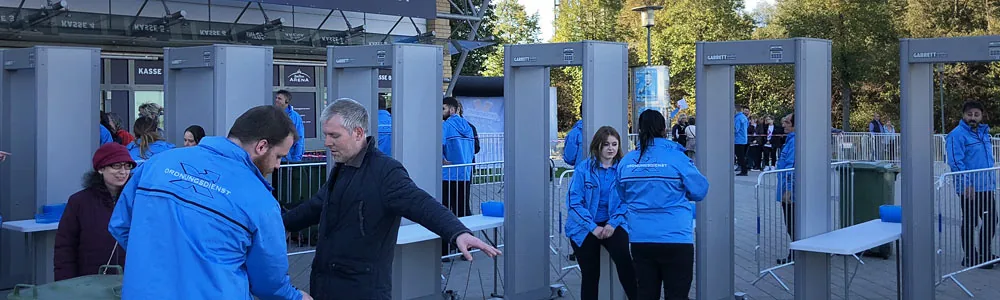
Person checks secure access to public authorities, courts, factory sites, airports or events. What matters is who does the checking. Public officials of the police, customs or public order office may establish an identity even against the person's will. A private security service may not. Its check is always voluntary and merely a condition for being admitted to a security area.
The rights of the security service
In principle a security employee has no more rights than the person they check. They rely on the operator's domiciliary rights. Anyone who refuses the check does not have to be searched, but can be turned away. Usually a polite request to show ID is enough. Photographing it with a smartphone or archiving it is not allowed. There is no legal basis for that under the general data protection regulation (GDPR). As a rule, private security staff do not carry weapons.
What person checks are for
The aims differ by location. Companies keep out non-company individuals and thus prevent espionage, sabotage and theft. Event organisers combine the ticket check with hazard prevention. Clubs back up age checks, airports stop prohibited objects, and retail uses visible checks as a deterrent.
Suspicion-independent checks remain reserved for the authorities
The suspicion-independent person check is reserved for public officials, above all the police. It is permitted for hazard prevention, for example at demonstrations or sporting events where unrest is expected. If a concrete suspicion arises, the police may not only establish identity but also search and take further measures. A private service expressly does not have these powers.
Mandatory checks at the security area
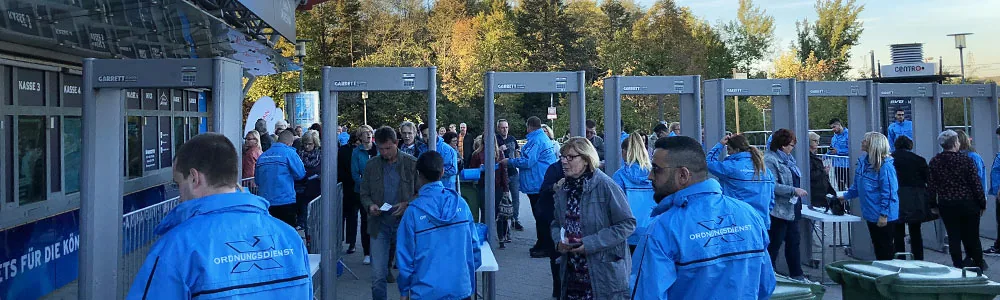
At the entrance to security-relevant areas, the security service checks whether someone is carrying dangerous objects. This applies in public authorities, courts, power plants, airports or factory warehouses, with hand and walk-through detectors or baggage scanners. Anyone who refuses the check is not admitted. Here too the principle holds. The check is voluntary, it is only the condition for entry.
Body search at events
The person check in the stadium or at the entrance to an event is a body search on a voluntary basis. It requires the person's consent, and each one is asked individually. The basis is the domiciliary right, and anyone who refuses can be turned away. If no prohibited objects are found, entry is clear.
Man or woman? When the detector changes the rule
Without a technical aid, checking may only be done by someone of the same sex. The hand-held metal detector changes that. It is guided along the person without contact. That makes checking a person of the other sex permissible too. This is what makes the hand-held wand so practical at the entrance.
Trained security staff
Technology does not replace competence. Successful checks require trained staff. The basis is the 40-hour instruction from the IHK, the German chamber of industry and commerce, under section 34a of the German trade regulation act (Gewerbeordnung, GewO), and for certain activities the IHK expert examination is added. Every guard must also be entered in the German guard register (Bewacherregister).
Hand detectors for person checks
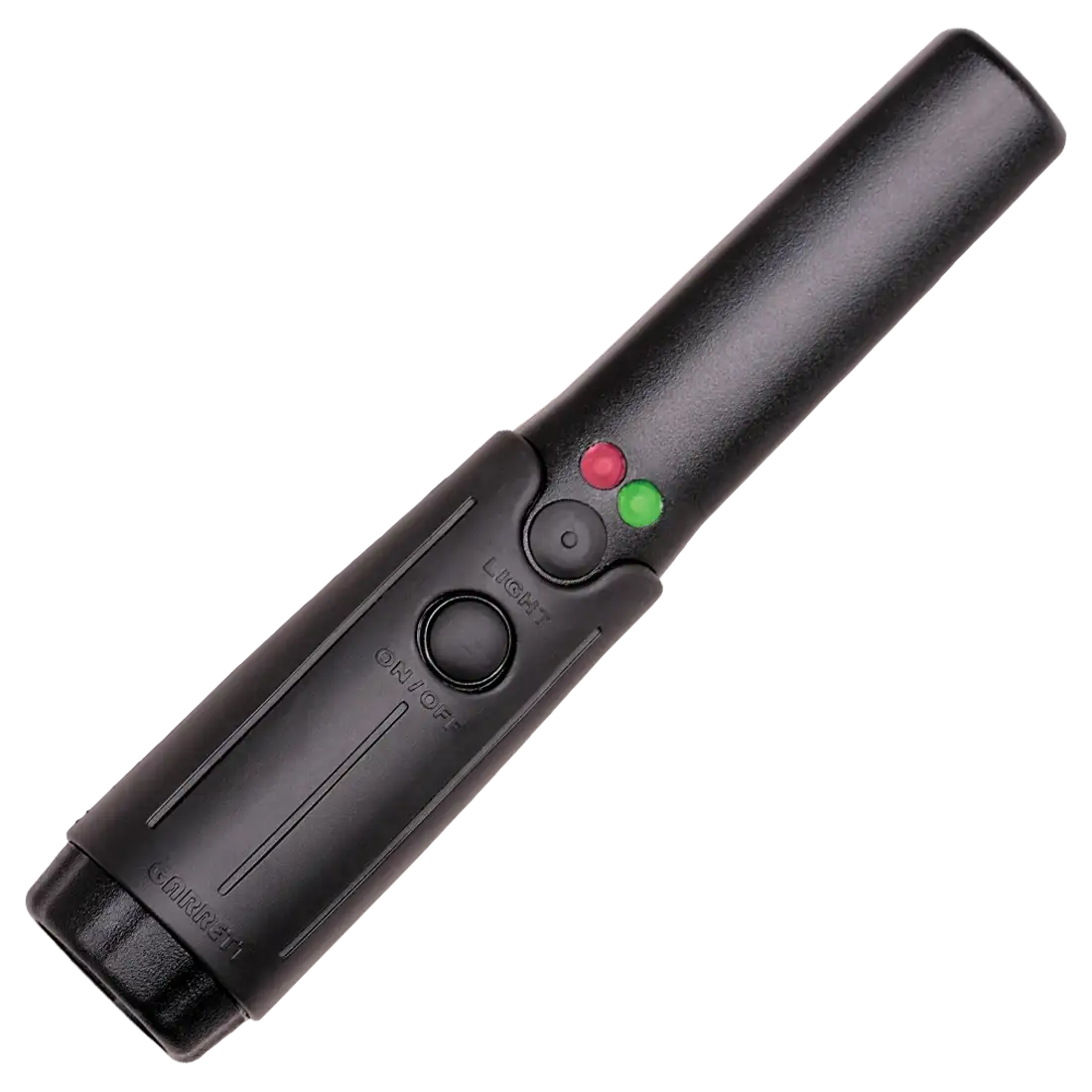
Garrett THD (Tactical Hand Held). Compact and light, designed for long shifts, with a 360-degree scan field and a 10 cm scan surface. It locates metal precisely at the tip of the device, is ready to use immediately after switching on and has an LED light for night and baggage checks. The impact-resistant housing can, if needed, also be used as a control baton.
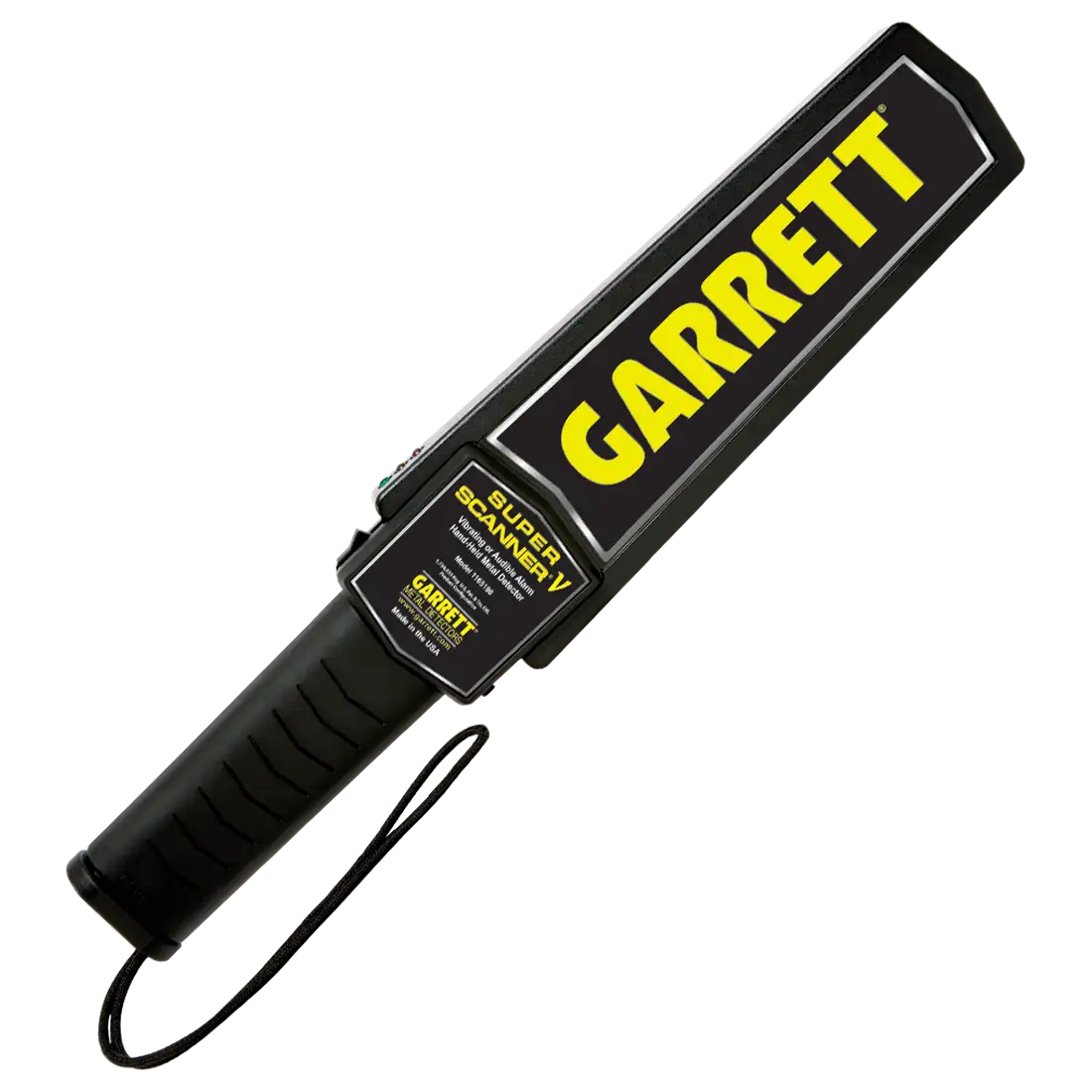
Garrett Super Scanner V. The hand detector with a large scan surface, in professional use for more than 20 years. High sensitivity to weapons and metal parts, automatic calibration, acoustic and visual alarm. An elimination switch masks out interfering ambient metal.
To the Garrett Super Scanner V
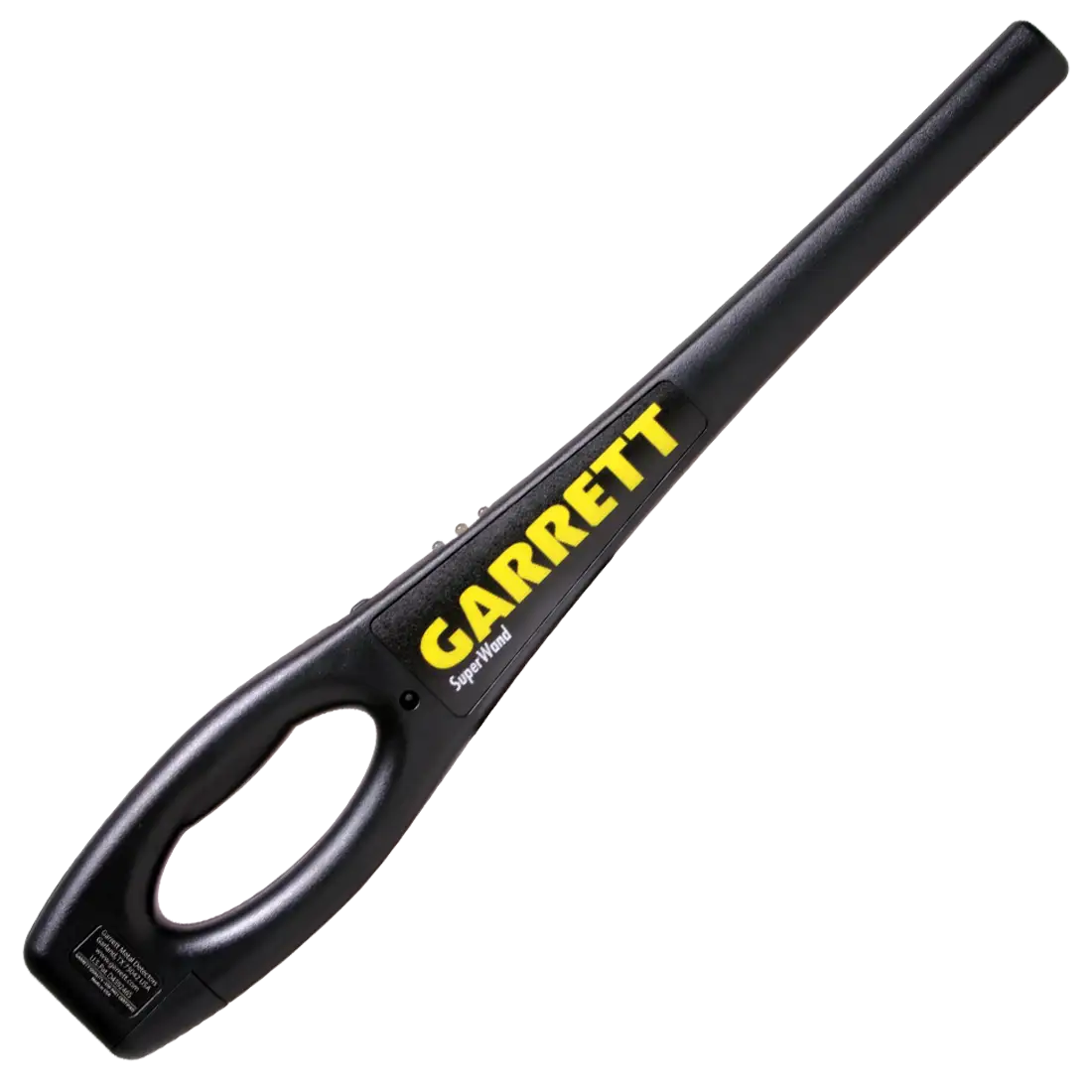
Garrett SuperWand. A slim hand-held wand with a 360-degree scan field and automatic basic setting, self-calibrating, ready to use without any adjustment. The ergonomic grip causes little fatigue even over a long shift, and the three-position switch selects between sound, silent vibration and LED signal.
Our references show a selection of the deployments we have supported with our security technology.
More articles
Mini Cellphones in Prisons
When 6.35 centimetres undermine prison security. And what helps against it.
Temperature Screening with a Walk-Through Detector
Temperature screening in the walk-through detector. How an add-on module extends entry control by one dimension.
How do access controls deliver the highest security?
Access controls secure buildings, zones or sites. Entry by RFID or card, chip, numeric code, QR code, app and facial recognition. Access controls govern entry through a defined set of rules. The principle is always who, when, where. Only authorised people gain access to the areas cleared for them.
Call us directly
or send us your enquiry.
Free and without obligation. We advise on the right technology for your use case.
Monday to Friday, 8 am to 5 pm. Replies to enquiries within 24 hours.