X-ray units for baggage screening
X-ray baggage scanners show the trained operator the contents of bags, baggage and shipments on the monitor. In Germany, operating them is subject to notification under the Radiation Protection Act (StrlSchG), but with these type-approved devices it usually does not require a dedicated radiation protection officer. We handle selection, commissioning and the recurring inspection.
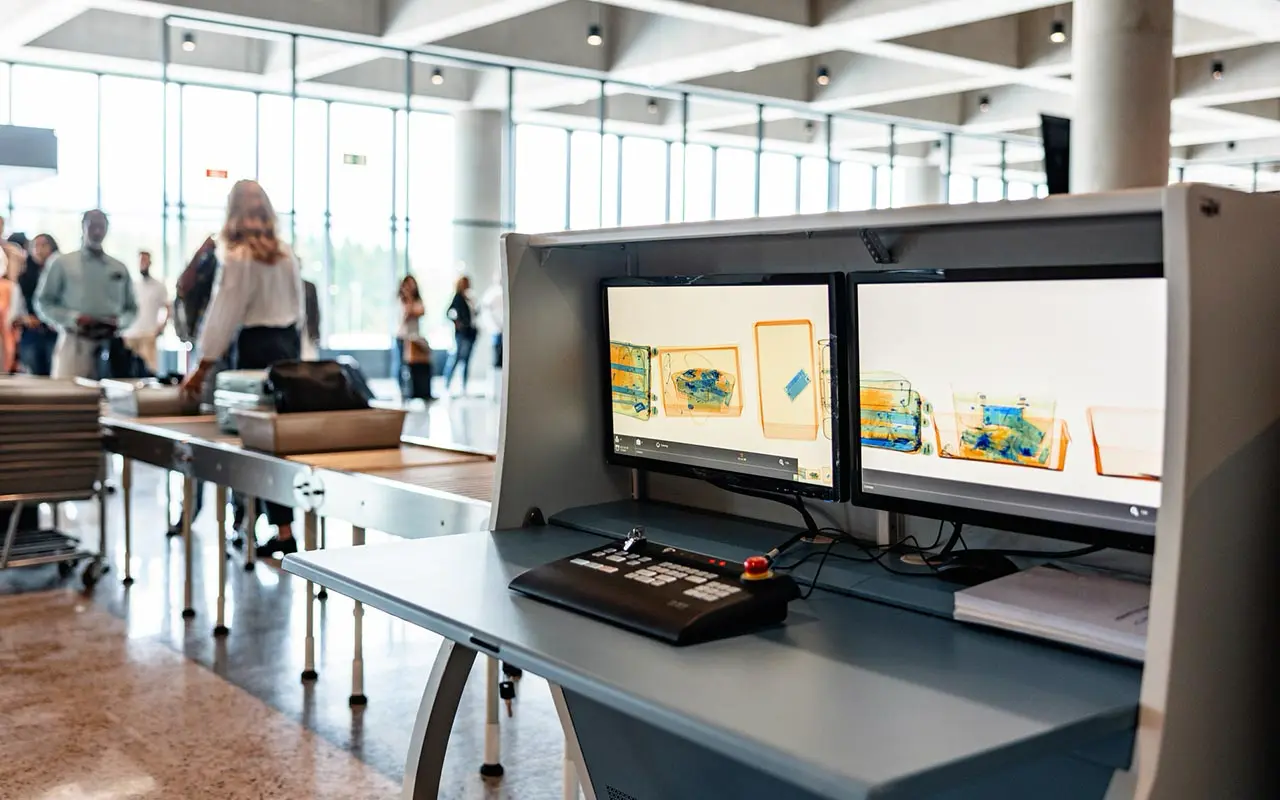
X-ray baggage scanners are operated by trained security staff who look inside bags, baggage and shipments on the monitor. Suspicious items are clarified by a manual secondary check, and if needed with an explosives trace test. Which device fits depends on the location, the security level and the volume of baggage.
Immediate initial consultation
We look forward to hearing from you and are glad to prepare an individual quote. We serve customers in Germany, Austria and Switzerland.
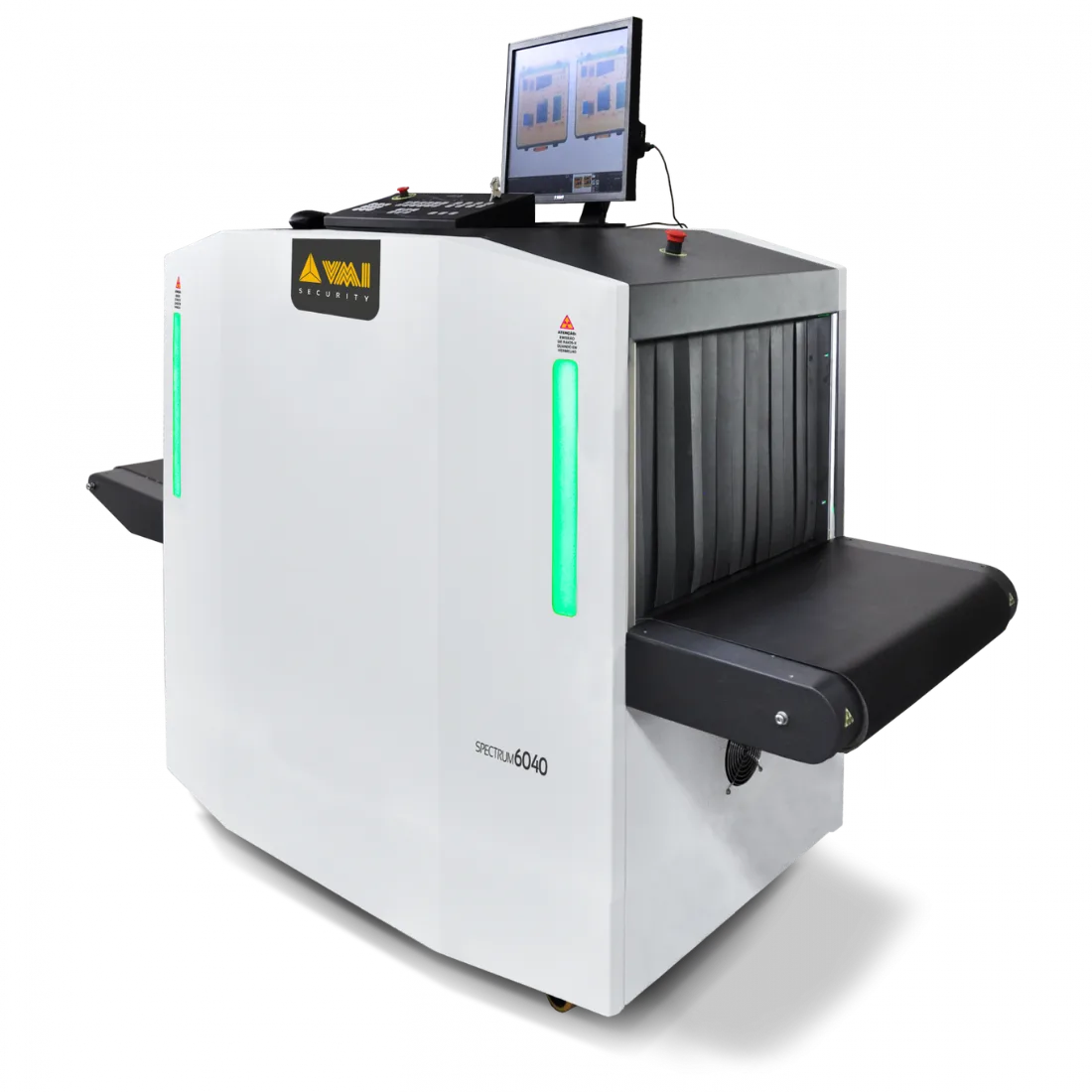
Send requestTogether with walk-through and hand-held metal detectors, the X-ray scanner forms the baggage part of a security lane. The VMI devices work with a 160 kV generator, penetrate up to 42 mm of steel and separate materials automatically by colour. Optionally the ARPiA AI software detects suspicious objects on its own, and the threat image projection TIP keeps operator attention sharp during ongoing operation.
What the colours mean in baggage X-ray
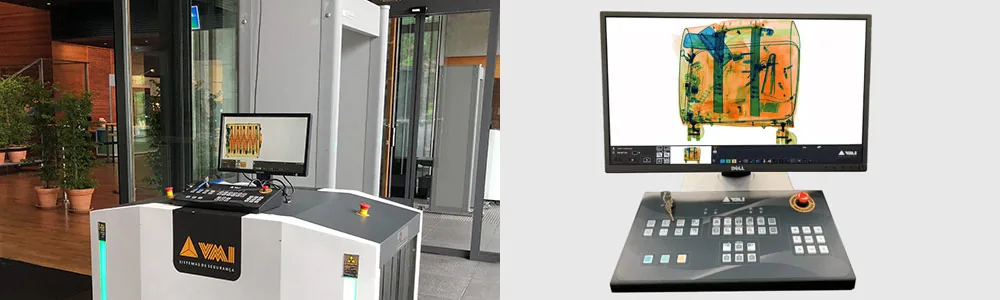
The scanner irradiates the baggage with two energy levels and so recognises the material as well as the shape. The result appears colour-coded on the monitor. Organic substances such as paper, plastic or explosives appear in orange, metal in blue, and mixed or overlaid objects such as electronics in green. Shape and colour give the operator the first indication, and final certainty comes from looking inside the item.
Operator obligations and other aspects
- Operating a baggage scanner is subject to notification in Germany. As a type-approved fully shielded device, you register it under the Radiation Protection Act (StrlSchG) at least two weeks before commissioning with the responsible authority, in North Rhine-Westphalia the district government (Bezirksregierung).
- A radiation protection officer is not required for type-approved fully shielded devices (section 19(3) StrlSchG). That noticeably lowers the operating effort. The notification and the documented instruction of the operating staff remain mandatory.
- The operating staff must be trained in handling X-ray devices, ideally with a competence examination under section 34a of the Trade Regulation Act (GewO). We instruct your staff on our devices and issue a certificate of attendance.
- A type-approved fully shielded device keeps the radiation safely inside the protected housing. The statutory limit is 3 µSv/h at a distance of 0.1 m, and the VMI devices stay well below that at under 1 µSv/h. The tube runs only when the housing is closed.
- In addition, an officially appointed expert checks the device before first commissioning and thereafter at least every five years.
- X-ray scanners weigh around 435 to 495 kg depending on the model. Factor floor loading and transport routes into the planning of your lane early. A power supply of 220 to 240 volts is sufficient.
- Unlike metal detectors, the scanner is not sensitive to its electromagnetic surroundings.
- We recommend involving the works council, where one exists.
We handle the commissioning, installation and annual maintenance of your X-ray device. We are glad to advise you on the selection and the planning of your security lane.
Call us directly
or send us your enquiry.
Free and without obligation. We advise on the right technology for your use case.
Monday to Friday, 8 am to 5 pm. Replies to enquiries within 24 hours.