Public authorities
Courts, town halls and citizens' offices screen public visitors on the basis of their right to control the premises (Hausrecht). The task is rarely the technology but its placement. Narrow entrances, single-person reception desks and queues make the difference. That is exactly where we plan with you.

In courts, town halls and other public institutions, entrance screening is part of everyday life. Legally it rests on the operator's right to control the premises (Hausrecht). The technology is rarely the problem here. What matters is how the security lane and metal detector fit into a building that is rarely designed for them.
Immediate initial consultation
We look forward to hearing from you and are glad to prepare an individual quote. We serve customers in Germany, Austria and Switzerland.
Send requestChallenges of placement
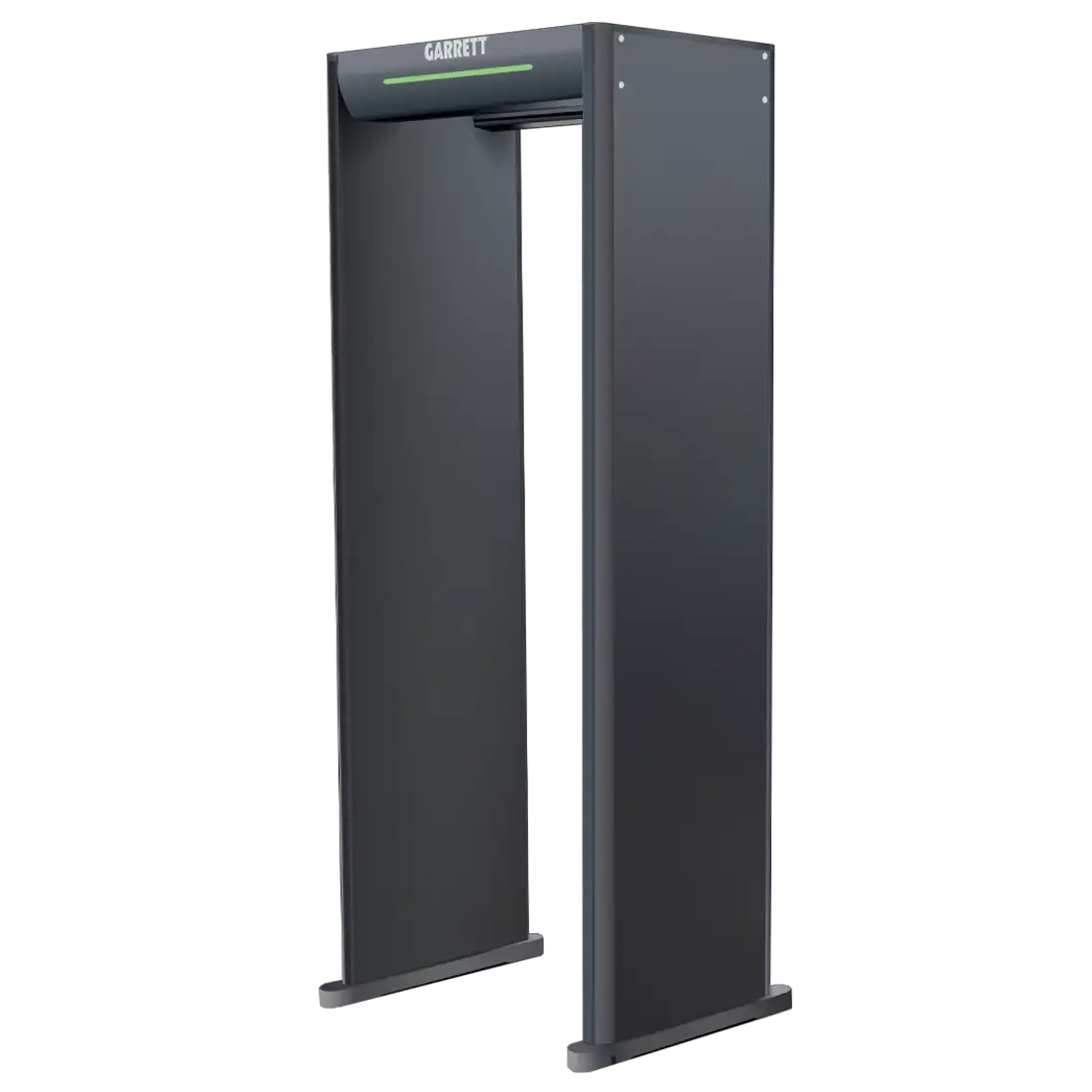
Narrow entrances, stairs, electrically controlled doors and small rooms make the ideal setup harder. Often only one person, such as a receptionist, operates the detector and cannot stand at the device all the time. A walk-through detector with remote control and display solves this. The staff stay in place and monitor the check from a distance, without additional personnel.
Congestion at the entrance
If the detector stands right in the doorway, queues form, in rain or cold reaching outside. That is not only unpleasant. It backs unscreened people up in front of the check. A dedicated, covered screening area upstream and a device with the right program keep the flow moving. The Garrett PD 6500i comes with more than 20 preconfigured programs for this.
Designing the access
The requirements for a check are strict. The available space and the budget rarely are. We resolve this conflict by tailoring the lane to the real conditions instead of the ideal case. We look at the structural and operational conditions on site and plan your access so that the check works without slowing operations. From the site survey through device selection to commissioning, we handle every step.
Keeping security in operation
A check only works as long as the settings are right and the staff operate it confidently. For this we set up a lean routine. The settings are checked at the start of duty or at the shift change, throughput and alarm figures are recorded continuously, and effectiveness is reviewed at quiet intervals against current requirements. In addition, we refresh your staff's instruction from time to time, so that the initial care is kept up.
One device for the court entrance
A worked example for the steady entrance screening of a court.
The maths at the court entrance
A court with 1,200 visitors across the day has no peak rush like a stadium but a steady stream. Over eight opening hours, the Courthouse program at around 850 people per hour makes a single walk-through detector enough, complemented by the hand-held detector for the secondary check.
A second device brings no gain here, because the crowd spreads across the day and the queue at a single device never becomes critical. The real work lies in the setting. The court defines what may pass, and the detector separates exactly at that line between everyday item and dangerous metal. Only this fine-tuning turns a walk-through into a dependable check.
For the permanent setup you choose the Paragon, to buy or on monthly rental. On request we handle the site survey, setup and the instruction of the reception service.
Have your access plannedCourt entrance
Example scenario. The number of devices follows the throughput model and is planned for your site.
Call us directly
or send us your enquiry.
Free and without obligation. We advise on the right technology for your use case.
Monday to Friday, 8 am to 5 pm. Replies to enquiries within 24 hours.