Large events
Large events are screened at places that are rarely designed for it. The typical traps are flexing tent floors and tight time. We plan the lane so that it runs reliably under these conditions, on request with staff.
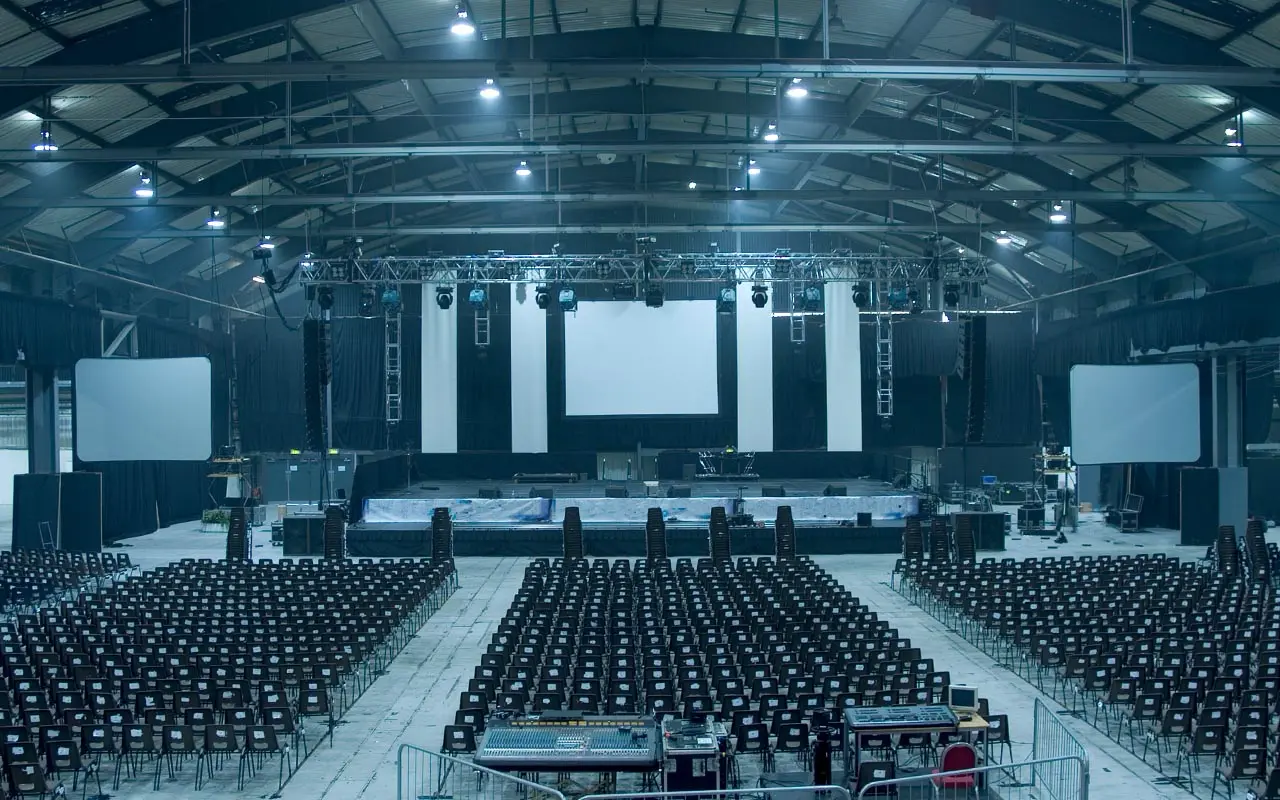
At large events, metal detectors are meant to catch dangerous items before they reach the grounds. The technology is proven, and the difficulty lies in the place. Events mostly take place where no fixed screening infrastructure exists.
Immediate initial consultation
We look forward to hearing from you and are glad to prepare an individual quote. We serve customers in Germany, Austria and Switzerland.
Send requestAdapting to the venue
Often a tent in front of the building serves as the screening point. Space, cover and above all the floor decide smooth entry and belong in the planning before the first device is set up.
Care with flexing floors
The classic mistake at events is floors prone to vibration. Temporary wooden floors on frames, as are usual in tents, start to move and disturb the sensitivity of the detector. The result is false alarms or failures that slow entry. A stable, decoupled stand prevents this.
Technology and staff
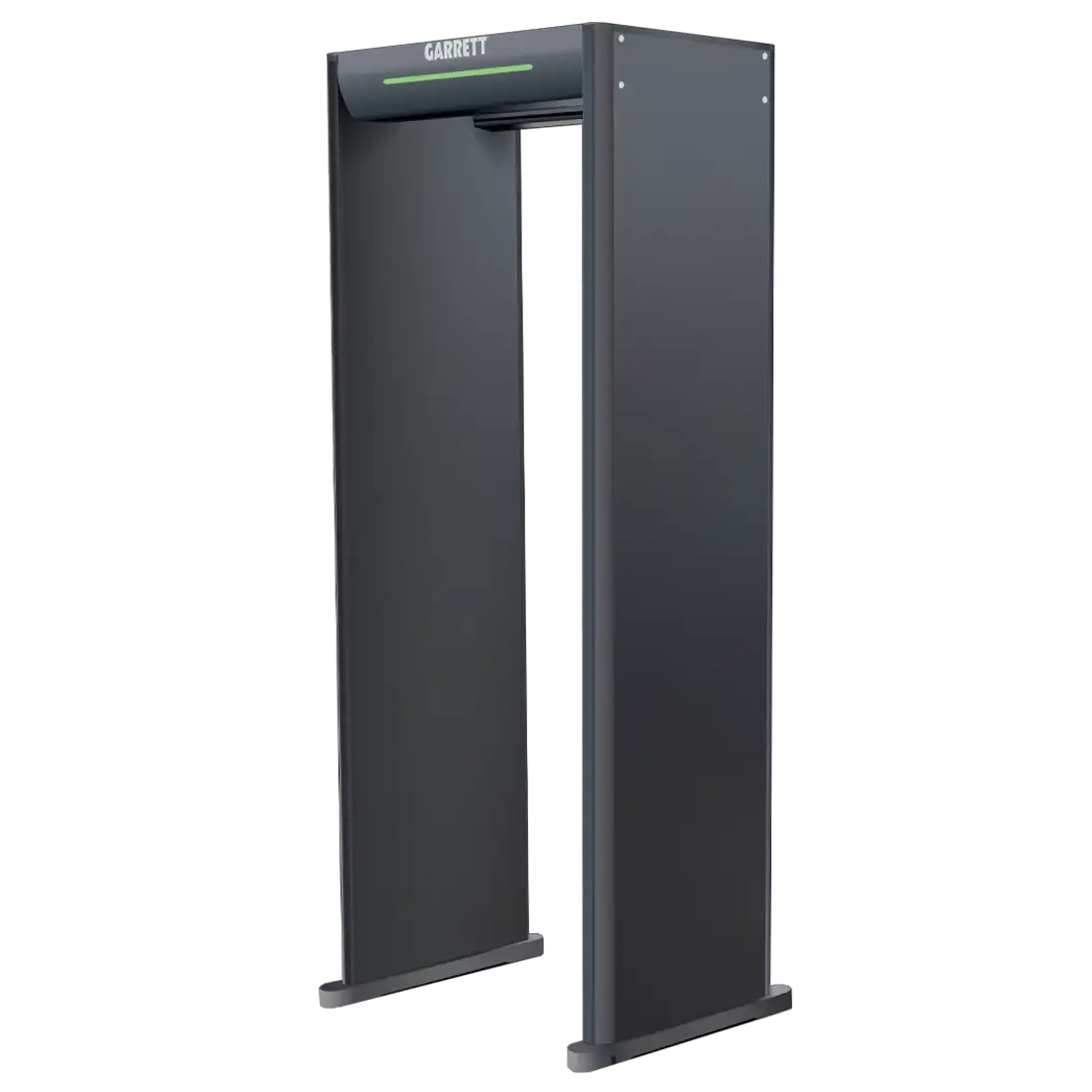
The Garrett PD 6500i is set up by one person in around 30 minutes and comes with programs for event operation. On request we provide operating staff. For admission to access-controlled large events, the law requires a competence examination under section 34a of the Trade Regulation Act (GewO) in a supervisory role. Every guard must be entered in the guard register (Bewacherregister). We advise you on selection, setup and the design of the screening area.
Throughput at the entrance
At full admission, the speed decides the length of the queue in front of the gate. Programs such as Quick-Q let small everyday items such as the mobile phone stay in the pocket and focus the check on the actual threats, which noticeably speeds up the flow. The Garrett Paragon resolves the location of a find on the body precisely with 66 zones, so the secondary check acts in a targeted way. In protection class IP 65 it also works outdoors in wind and rain, provided it is set up properly.
That this technology also withstands the largest audiences is shown by its use at the 2026 football World Cup. Garrett is equipping the Mexican World Cup stadiums with walk-through and hand-held detectors, including the Paragon. Further deployments from events and shareholder meetings are shown in our references.
Seven lanes for ten thousand guests
A worked example shows how throughput, number of devices and rental come together at a stadium entrance.
The maths at the entrance
If ten thousand guests are to enter in the one-hour window before kick-off, the throughput per lane decides. In the Events program, a walk-through detector handles around 1,500 people per hour, because small everyday items may stay in the pocket. That gives seven parallel screening lanes.
The gain lies in the program. If the check runs set sharp to every piece of metal, the queue backs up onto the forecourt, because even a bunch of keys triggers the alarm. The Events program focuses the sensitivity on real threats and lets the phone stay in the pocket, which more than doubles the flow per lane. So the block gets in in time for kick-off.
For the three event days you rent the seven devices at the daily rate, which drops in the volume tier from three devices. On request our staff handle operation and the secondary check.
Have your entrance plannedStadium entrance
Example scenario. The number of devices follows the throughput model and is planned for your site.
Call us directly
or send us your enquiry.
Free and without obligation. We advise on the right technology for your use case.
Monday to Friday, 8 am to 5 pm. Replies to enquiries within 24 hours.